
Walk into any industrial facility, and you’ll find motors running at full speed, regardless of actual demand. That’s where most of the hidden energy loss begins. In systems like pumps and HVAC, motors rarely need 100% output all the time, yet they’re often operated that way, quietly driving up electricity bills.
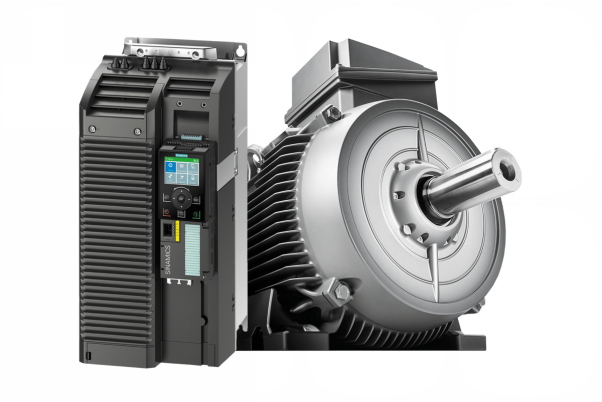
Motors and drives engineered by Siemens change the equation in these scenarios. By using variable frequency drives (VFDs), motor speed is adjusted in real time to match the exact load requirement, rather than wasting energy through throttling or mechanical control.
The impact is not marginal. Even small reductions in speed can lead to disproportionately large energy savings, especially in continuous operations.
For UAE industries dealing with high energy demand and rising operational costs, this shift from constant-speed operation to controlled efficiency is becoming less of an upgrade, and more of a necessity.
The Hidden Energy Problem in Industrial Motor Systems
In most facilities, motors are the quiet workhorses, running pumps, fans, compressors, and conveyors around the clock. What often goes unnoticed is how much electricity they consume. In many industrial setups, motors account for a significant share of total energy use, yet they are rarely operated in a way that reflects actual demand.
The issue lies in constant-speed operation. Motors are typically designed to run at full capacity, even when the process only requires a fraction of that output. Instead of adjusting speed, systems rely on mechanical methods like valves or dampers to control flow. This approach doesn’t reduce energy consumption, it simply restricts output while the motor continues to draw near full power. In a situation like this, motors and drives by Siemens begin to address a deeper inefficiency.
Without speed control, even minor mismatches between demand and operation can translate into sustained energy loss over time. In environments like the UAE, where cooling systems and water movement are essential, this inefficiency compounds quickly, turning routine operations into a significant cost burden.
How Variable Frequency Drives
Variable Frequency Drives (VFDs) work on a simple but powerful principle, control the motor’s speed by adjusting the frequency of the electrical supply. Instead of running at a fixed speed, the motor responds to real-time demand. This shift changes how energy is consumed across the entire system.
In applications like pumps and fans, power usage does not reduce linearly with speed, it drops significantly.
This is where motors and drives from the Siemens lineup bring practical efficiency into play. By combining VFD technology with precise control algorithms, they allow systems to operate only at the level required, no excess, no forced restriction.
Here’s how the savings actually happen:
- Speed matching to load: The motor adjusts output based on process demand, avoiding unnecessary full-speed operation
- Reduced throttling losses: Instead of restricting flow mechanically, speed control delivers only what is needed
- Lower mechanical stress: Smooth acceleration and deceleration reduce wear on components, extending system life
Together, these factors shift energy use from constant consumption to controlled efficiency.
Why Siemens Drives Stand Out in Real Industrial Applications
Not all drives deliver the same level of control once they’re deployed in real environments. What sets motors and drives manufactured by Siemens apart is how they combine precise speed regulation with system-level intelligence, making them more adaptable to changing industrial conditions rather than just maintaining a set output.
In practical applications, it comes up as better visibility, smoother operation, and fewer unexpected interruptions.
Here’s where the difference becomes noticeable:
- Integrated monitoring and diagnostics: Siemens SINAMICS drives continuously track performance parameters such as load, temperature, and operating status, allowing early detection of inefficiencies or faults.
- Advanced control algorithms: These drives optimise motor behaviour in real time, improving efficiency across varying loads instead of reacting passively to changes.
- Seamless automation compatibility: Designed to integrate with industrial control systems like Programmable Logic Controllers (PLCs) and Supervisory Control and Data Acquisition (SCADA), enabling coordinated operation across the facility.
- Reliable performance in continuous operations: Built for long-duty cycles, they maintain consistency even in demanding environments such as HVAC-heavy or process-driven industries.
Rather than just controlling speed, these systems contribute to overall operational stability and energy discipline.
Where the Energy Savings Actually Show Up
In the UAE, energy demand is closely tied to climate and infrastructure. Cooling systems, water circulation, and continuous industrial processes run for long hours, often under high load conditions. This is exactly where controlled motor operation starts to make a measurable difference.
The impact of motors and drives by Siemens is most visible in applications where the load fluctuates, but motors traditionally run at a fixed speed.
Key areas where savings typically appear:
- HVAC systems (chillers, cooling towers, air handling units). Speed control reduces unnecessary airflow and cooling load during off-peak demand
- Water pumping and distribution systems. Flow can be adjusted without relying on throttling, cutting excess energy use
- Industrial cooling and process circulation. Motors adapt to process requirements rather than operating at a constant output
- Ventilation and exhaust systems. Fans run only as needed, especially in large facilities
In such variable-load applications, energy savings can realistically range between 20% to 60%, depending on system design and usage patterns. This is why controlled drive systems are increasingly being adopted, not as an upgrade, but as a practical step toward managing rising energy costs in the region.
What This Means for Long-Term Operational Costs
Energy is not a one-time expense, it’s a continuous operational load that often makes up the largest share of a motor system’s lifecycle cost. In many industrial setups, electricity can account for over 90% of total motor-related expenses over time. The shift from constant-speed operation to controlled performance starts to show real financial impact. By aligning output with demand, systems avoid unnecessary consumption, which directly reflects in monthly energy bills.
With motors and drives developed by Siemens, the benefit extends beyond energy savings. Reduced mechanical strain means fewer breakdowns, less frequent maintenance, and longer equipment life. Motors don’t face abrupt starts or continuous overload, which helps stabilise performance over extended periods.
There’s also an operational advantage. Better control over speed and load leads to more consistent process outcomes, reducing waste and improving efficiency across production cycles.
Over time, the focus moves from upfront cost to total cost of ownership, and that’s why controlled drive systems begin to justify their place in modern industrial setups.
Start Optimising Energy Efficiency with the Right Drive Solution
Choosing the right drive system is about making your operations more efficient where it actually counts. At Smart Elemech, we work with you to understand how your systems run today and where energy losses are quietly building up. With proven solutions like motors and drives supplied by Siemens that are integrated, the focus shifts to controlled performance, reduced consumption, and long-term reliability.
Whether you’re upgrading an existing setup or planning a new installation, we help you select what truly fits your application, not just what looks good on paper. If you’re looking to cut energy costs without compromising output, connect with our expert team and get practical, experience-backed guidance tailored to your facility.
Optimise Your Energy Costs Today *Contact Us*