
Nothing tests a facility manager quite like a July afternoon in the UAE. When outdoor temperatures hit 50°C, rooftop chillers and cold storage systems face extreme stress. If you rely on an industrial cooling compressor in Dubai, a breakdown during peak summer can spoil inventory, halt factory lines, and force emergency replacements. Protect your equipment with four checks: clear condenser airflow, track oil quality, monitor discharge heat, and inspect electrical contacts.
This practical field guide walks you through the exact warning signs, safe temperature ranges, and daily routines your team needs to keep cooling systems running through the hottest months.
Jump to: Why 50°C summer heat pushes compressors to failure · Step 1: Clear condenser coils and fan motors · Step 2: Check oil levels, clarity, and temperature · Step 3: Track discharge temperatures and superheat balance · Step 4: Inspect electrical contactors and terminal blocks · Maintaining your industrial cooling compressor in Dubai plants
Why 50°C summer heat pushes compressors to failure
Refrigeration systems do not create cold air; they remove heat from inside your facility and dump it into the outdoor atmosphere. When outdoor ambient air reaches 50°C, that heat transfer becomes an uphill battle.
To push heat into scorching desert air, your compressor must squeeze refrigerant vapour to much higher head pressures. Higher pressure forces internal electric motors to draw heavy current, generating intense internal heat. At the same time, standard lubricating oils thin out rapidly under extreme thermal loads. When lubricant viscosity drops, moving pistons, scroll wraps, and bearing journals lose their protective oil film, allowing bare metal surfaces to rub directly against each other.
If heat rejection drops even 5% because of dust buildup or sluggish fans, the system can quickly spiral into disaster. The compressor either trips repeatedly on high-pressure safety switches or burns out thermally.
| Critical Check | What to Use | Safe Running Range | Danger Red Flag | What It Means |
| Airflow | Anemometer or visual check | Clean fins, steady draft | Clogged fins, slow fans | High head pressure building up |
| Oil Sight Glass | Visual inspection | Clear golden, half full | Black/milky, empty glass | Oil cooked or lost in circuit |
| Discharge Line | Clamp-on temperature probe | 70°C to 95°C | Above 107°C (225°F) | Valves overheating, oil carbonizing |
| Motor Amps | Clamp meter | Within rated nameplate FLA | Exceeding nameplate amps | Motor struggling against pressure |
Step 1: Clear condenser coils and fan motors
Airflow is your first defense against summer heat. If condenser coils cannot breathe, the entire cooling loop backs up with trapped heat, forcing your compressor to work twice as hard.
Desert dust in Dubai settles into coil fins every week, especially after shamal winds. This dust layer acts like an insulating blanket, trapping heat inside condenser tubes. Research shows that dirty condenser coils often push condensing temperatures past 60°C, causing chronic high-pressure switch trips and higher power draw.
Take these three practical actions every week:
- Wash coils with low pressure: Use clean water and a mild cleaner to remove sand. Avoid high-pressure washers that bend fragile aluminum fins.
- Inspect condenser fan motors: Feel fan motor housings for hot spots and verify fan blades spin at full rated speed without wobbling.
- Check airflow direction: Make sure nearby ducting or privacy walls aren’t trapping hot discharge air and recirculating it straight back into the coil intakes.
Step 2: Check oil levels, clarity, and temperature
Compressor oil does more than lubricate spinning metal parts. It cools internal bearings, seals clearances between compression chambers, and muffles mechanical noise.
When high summer heat hits your system, oil faces brutal thermal stress. Polyolester lubricants break down into corrosive organic acids under sustained heat and moisture cycles.
Keep a close eye on the compressor sight glass:
- Check the colour: Fresh oil is pale amber. If oil turns dark brown or black, it has scorched from extreme discharge heat. If milky, moisture has entered.
- Watch the level: The oil level should sit between one-third and two-thirds of the sight glass while running steady. If empty, oil is trapped in the circuit.
- Sniff the crankcase during service: Burnt, acrid-smelling oil indicates severe overheating of the motor windings and acid formation.
Step 3: Track discharge temperatures and superheat balance
The single best indicator of compressor health is discharge line temperature. Measure this with a calibrated pipe clamp probe placed six inches from the service valve.
Technical data published by the Refrigeration Service Engineers Society / RSL Technical Guide (2024) explains that when a discharge line reaches 107°C (225°F), internal discharge valves run at least 40°C hotter, crossing 150°C (300°F). At that temperature, lubricant molecules break apart, leaving sticky carbon deposits that destroy reed valves and rings.
Balance your temperature checks using two practical steps:
- Keep discharge below 105°C: If line temperatures hover around 100°C, check whether condenser coils need washing or if refrigerant is low.
- Verify suction superheat: Suction superheat should stay between 5K and 10K at the compressor inlet. If superheat drops below 3K, liquid refrigerant enters cylinders, washing away oil film. If superheat is too high, the motor overheats.
Step 4: Inspect electrical contactors and terminal blocks
Electrical problems spike sharply during UAE summers because high ambient air temperatures combine with high running current to cook electrical cabinets.
Rooftop electrical panels in Dubai often reach 65°C in direct sun. Heat increases electrical resistance, causing contactors to chatter and terminals to loosen.
Add these electrical checks to your monthly routine:
- Check contact points for pitting: Pitted contacts cause voltage drops, forcing compressor motors to draw extra current.
- Torque terminal screws: Thermal expansion and continuous vibration loosen electrical lugs. A loose terminal generates intense local heat that melts terminal blocks.
- Measure running amps: Use a clamp meter to measure current across all three phases. Current draw should match compressor nameplate ratings within 10%.
Quick troubleshooting: 4 common summer compressor emergencies
When a cooling compressor shuts down on a 50°C afternoon, maintenance technicians need fast, practical troubleshooting steps. Here is how to diagnose the four most common mid-summer compressor emergencies:
1. High-pressure switch lockout: If the compressor trips repeatedly during the hottest hours of the day, don’t just press the manual reset button. Check for blocked condenser airflow, failed condenser fan motors, or dirty coils. If the coil is clean, check for non-condensable air in the system or an overcharged refrigerant circuit.
2. Compressor running scorching hot but cooling poorly: If the compressor body is hot to the touch while suction pressure runs unusually high and discharge pressure runs low, the internal valve plates or scroll seals have blown. The compressor is merely churning hot gas inside its own cylinders rather than pumping it through the system.
3. Repeated thermal overload trips: If the internal motor protector trips after fifteen minutes of operation, measure running amps against rated FLA. High current points to tight mechanical bearings, severe phase unbalance, low supply voltage, or a failing run capacitor.
4. Oil level vanishing from sight glass: If oil disappears while running under heavy load, check your suction-line piping traps and oil-separator float valves. Never blindly dump fresh oil into a system without finding where the missing oil went, or you risk liquid slugging when trapped oil suddenly returns all at once.
Maintaining your industrial cooling compressor in Dubai plants
Preventive maintenance saves thousands of dirhams compared to mid-summer emergency replacements. A dedicated morning checklist takes your technicians only ten minutes per unit, but it catches oil discoloration, airflow blockages, and rising temperatures before safety switches lock out.
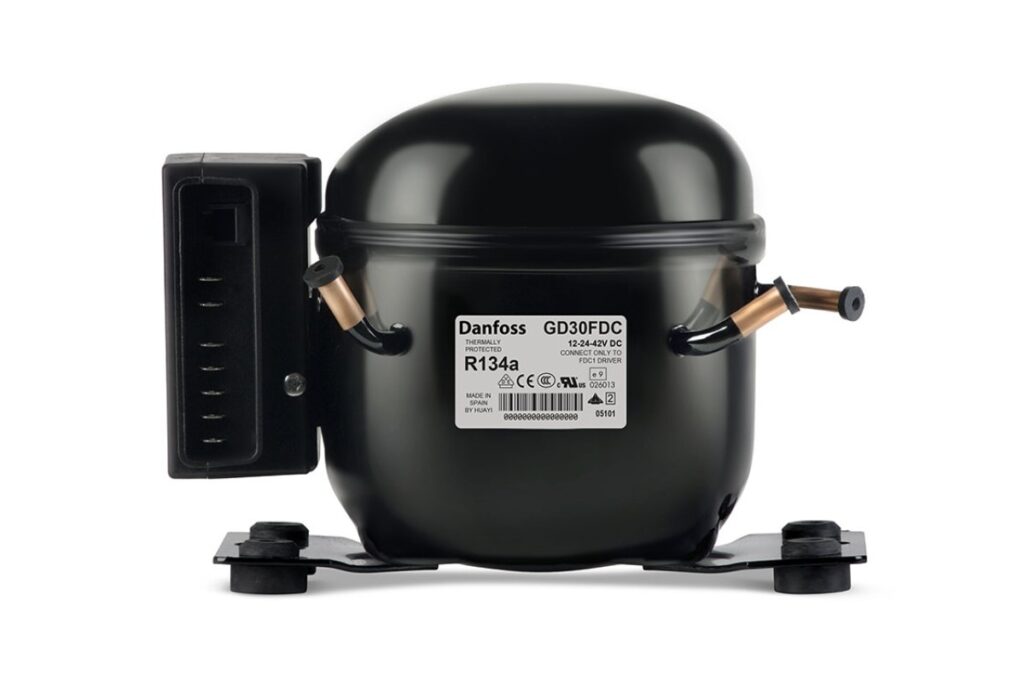
When equipment reaches the end of its reliable lifespan or fails mechanically, sourcing authentic replacement units is essential. Working with specialized UAE distributors like Smart Elemech ensures quick access to genuine Copeland, Carlyle, Danfoss, and Hitachi compressors engineered specifically for severe Middle Eastern ambient duties.
Fixing small problems in the morning keeps your chillers running cold through the hottest afternoon. Need a replacement or a second opinion on a failing unit? Contact Smart Elemech with the compressor model, refrigerant, and application to source a genuine industrial cooling compressor in Dubai before the next peak-heat season.