
Every maintenance tech in the UAE knows the dread of hearing a harsh screech echo across the factory floor. When you run industrial bearings in Dubai, ignoring subtle warnings almost always triggers an expensive shutdown right during a busy production run. Catching a bad bearing takes only ten minutes if you know what to look for: abnormal noise, excessive vibration, and rapid temperature spikes. Spotting these three red flags early lets your team fix the problem during scheduled downtime instead of scrambling through emergency repairs.
Here is a quick walk-around routine you can use every day to catch bearing trouble before your machines grind to a halt.
Jump to: The 3 silent signals of bearing distress · Acoustic checks: clicks, hums, and screeching sounds · Vibration analysis using ISO 20816 baseline limits · Heat thresholds for industrial bearings in Dubai plants · How GCC desert dust degrades industrial bearing grease · When to regrease versus replace industrial bearings
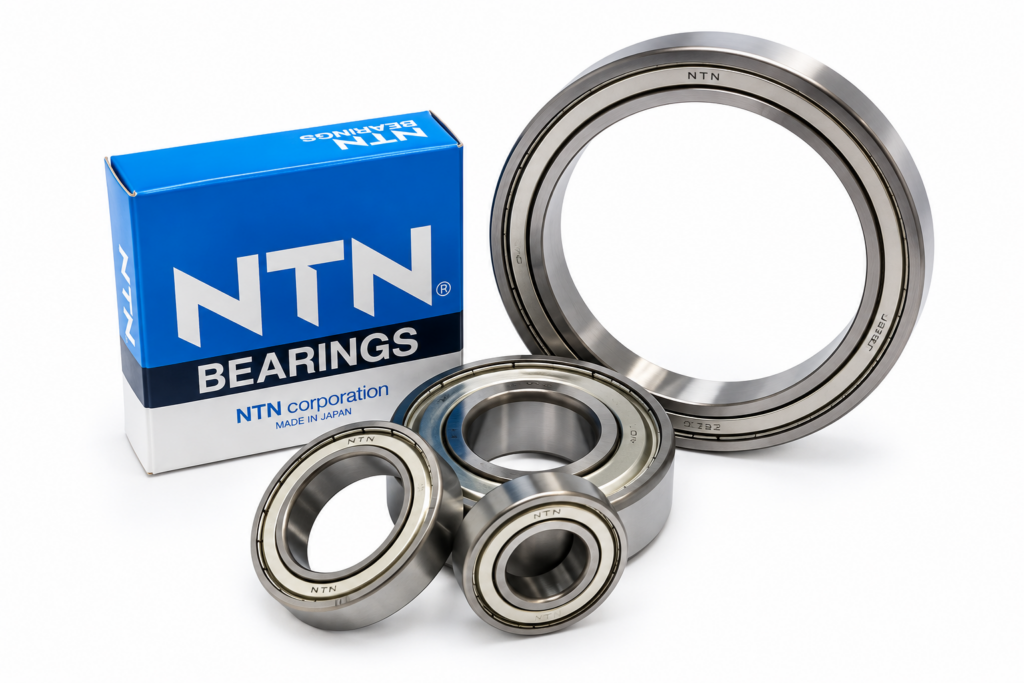
The 3 silent signals of bearing distress
Bearings do not fail without dropping clear warnings first. When Gulf summer temperatures climb past 45°C, factory equipment faces severe heat, and moving parts wear out much faster than in cooler regions.
You don’t need a lab to tell if a bearing is failing. You just need three fast checks:
1. How it sounds: Catch scratchy friction, loud hums, or rhythmic clicks before metal flaking ruins raceways.
2. How it shakes: Measure housing wobble and vibration before components shake themselves loose.
3. How hot it runs: Check housing temperature to spot burning grease or tight internal friction.
Running through all three checks on your daily walk-around takes less than ten minutes per machine.
| Quick Check | Handheld Tool | Healthy Target | Danger Sign | Most Likely Cause |
| Sound | Listening probe/stethoscope | Soft, steady hum | Piercing screech or clicks | Dry lubricant or chipped raceway |
| Vibration | Vibration pen | Smooth purr (< 2.8 mm/s) | Heavy shaking (> 4.5 mm/s) | Unbalance or worn rollers |
| Heat | Infrared thermometer | 50°C to 70°C steady | Blistering hot (> 85°C) | Cooked grease or misalignment |
Acoustic checks: clicks, hums, and screeching sounds
Your ears are your first defense on the plant floor. Even in noisy compressor or pump rooms, a simple contact stethoscope pinpoints internal friction immediately.
Listen for these four distinct warning sounds:
- A high-pitched squeal: The grease film has collapsed. Bare steel balls scrape against dry raceways, causing rapid wear.
- A steady rhythmic clicking: A ball or roller hits a tiny pit on the track. Higher speeds make clicks come faster.
- A crunchy growl: Broken cage metal or loose debris is tumbling inside. This bearing needs immediate replacement.
- A heavy drone: The bearing is pinched too tight, or belts and pulleys are pulling it out of alignment.
Research in SKF Bearing Damage and Failure Analysis (2022) shows that poor lubrication causes 36% of premature bearing failures, while dirt causes another 14%. Regular listening catches lubrication trouble weeks before vibration damages your machine.
Vibration analysis using ISO 20816 baseline limits
Vibration is physical proof that machine components are fighting each other. A handheld vibration pen placed on the bearing housing measures shaking speed in millimeters per second.
Maintenance teams rely on standard ISO 20816-3 guidance. As outlined in Vibromera / ISO 20816-3 Standards (2026), vibration severity falls into four practical zones:
- Zone A (New condition): Under 1.8 mm/s. The machine runs whisper-smooth.
- Zone B (Good running): Up to 2.8 or 4.5 mm/s. Safe for continuous factory operation.
- Zone C (Warning level): Above 4.5 mm/s. The machine can finish the shift, but schedule an inspection promptly.
- Zone D (Danger level): Above 7.1 mm/s. Shut down immediately to prevent broken shafts or damaged housings.
Take readings sideways across the housing and straight along the shaft. Vibration pushing along the shaft usually points to misalignment, while sideways shaking signals worn rolling elements or pitted tracks.
Heat thresholds for industrial bearings in Dubai plants
H2 – Heat thresholds for industrial bearings in Dubai plants
Keeping industrial bearings in Dubai cool is tough when summer weather hits 48°C in Al Quoz, Dubai Industrial City, or Jebel Ali. When ambient air is scorching, bearing housings cannot shed heat easily.
Under normal factory loads, healthy bearings settle between 55°C and 70°C.
Use these simple field thresholds:
- Green zone (Under 75°C): Normal operating temperature in Gulf plants.
- Yellow zone (75°C to 85°C): Investigate promptly. Check relubrication logs and clear sand from cooling fan covers.
- Red zone (Over 85°C): Standard grease breaks down rapidly above 85°C, turning watery and offering zero lubrication.
Compare opposite ends of the same machine. If the drive-end bearing runs 15°C hotter than the opposite end under identical airflow, misalignment or uneven radial loads are driving heat up.
How GCC desert dust degrades industrial bearing grease
Fine sand is everywhere across the UAE, and it ruins moving machinery. Airborne silica dust is harder than steel. When sand slips past worn lip seals, it turns grease into grinding paste that shreds precision surfaces.
Extreme heat makes things worse. Testing cited in SKF Temperature Limits Documentation (2023) shows grease life cuts in half for every 15°C rise above 70°C. A bearing running continuously at 95°C burns through grease four times faster than one at 65°C.
To protect machinery across the GCC:
- Use synthetic greases formulated for high temperatures and severe loads.
- Check seals regularly and wipe grease nipples clean before connecting your gun.
- Avoid overfilling. Pumping excess grease forces rolling elements to churn through surplus lubricant, triggering rapid overheating within hours.
When to regrease versus replace industrial bearings
A common mistake is pumping grease as soon as a bearing sounds rough. If the bearing is merely dry, fresh grease helps. But if the steel raceway is already chipped, extra grease won’t prevent failure.
Follow this field rule:
1. Add grease if: The bearing sounds dry through your stethoscope, vibration remains safe in Zone A or B, and temperatures stay under 80°C. Pump grease slowly until the sound softens, then stop.
2. Replace the bearing if: Vibration hits Zone C or D, you hear sharp clicking, or the housing feels blistering hot. Greasing a damaged bearing just circulates metal chips through fresh grease and risks total equipment seizure.
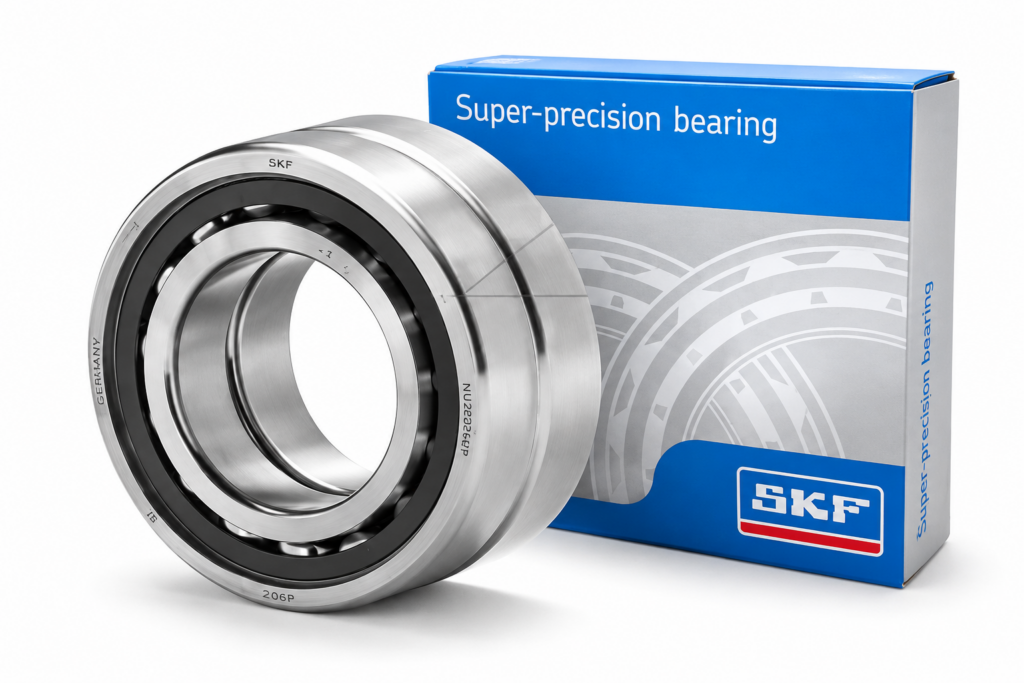
When a bearing reaches Zone C or D vibration, gives off sharp clicking, or runs blistering hot, replacement should not wait for the next breakdown. Contact Smart Elemech with the bearing number, the machine and the operating conditions to source genuine SKF, FAG, Timken or NTN replacements for industrial bearings in Dubai and across the GCC.